
Tooth Removal in Hyderabad
Safe & Comfortable Removal of Damaged Teeth
TOOTH REMOVAL is a routine dental procedure performed when a tooth is badly damaged or causing problems for surrounding teeth and gums. While saving natural teeth is always the first priority, removal becomes necessary in certain situations to prevent infection, overcrowding, or long-term oral complications.
Tooth Removal in Hyderabad, it’s important to understand why the procedure is done and how it works. A proper understanding helps patients feel more confident before treatment.
Modern dental clinics use advanced instruments and digital imaging to ensure accurate diagnosis and safe treatment. Tooth removal today is faster and more comfortable than in the past, allowing patients to recover quickly and return to normal activities.
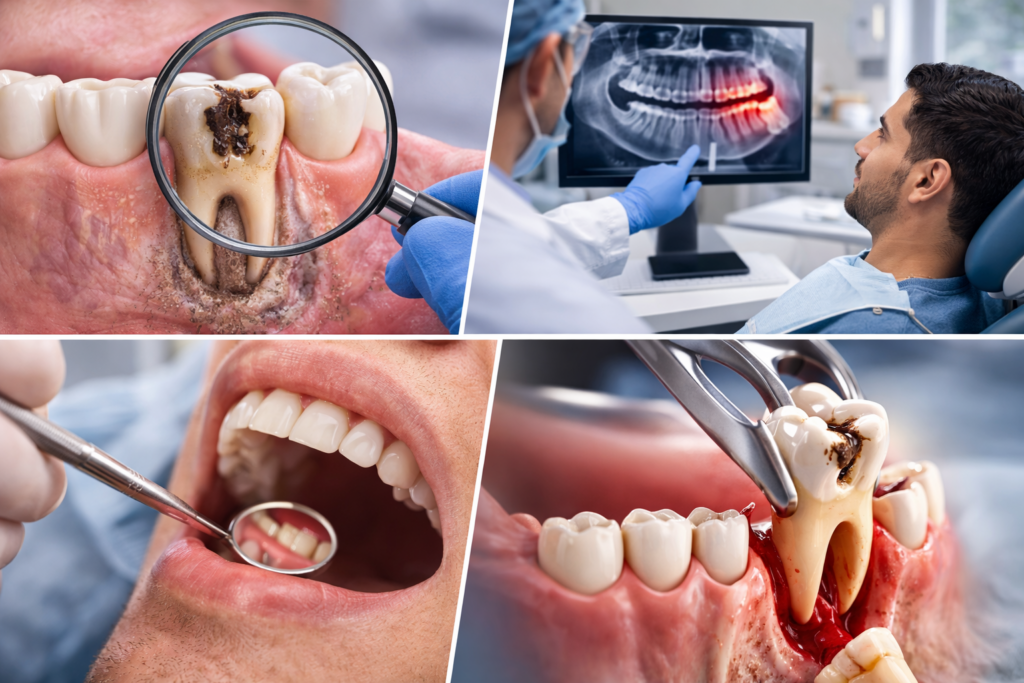
What Is Tooth Removal?

Tooth Extraction is the careful removal of a tooth from its socket in the jawbone. The procedure is performed under local anesthesia to ensure patient comfort. In some complex cases, minor oral surgery may be needed.
Dentists evaluate your condition through clinical examination and digital X-rays before recommending Tooth Removal. The goal is always to protect your overall oral health and prevent future dental problems.
Before the procedure, the dentist reviews your medical history and current medications to ensure safe treatment. Patients with certain medical conditions may require special precautions or additional care during tooth removal.
Common Reasons for Tooth Removal
1.Severely Decayed Tooth
When tooth decay has destroyed most of the tooth structure and restoration is not possible, Tooth Removal may be necessary.
2.Advanced Gum Disease
Gum disease can weaken the supporting bone and tissues, causing teeth to become loose.
3.Impacted Wisdom Teeth
Wisdom teeth that do not erupt properly can cause pain, swelling, and infection.
4.Broken or Cracked Teeth
Teeth fractured below the gum line may not be restorable and may require Tooth Removal.
5.Orthodontic Treatment
Sometimes teeth are removed to create enough space for proper alignment during braces treatment.
6.Overcrowded Teeth
Tooth Removal may be needed when there is not enough space for all teeth to align properly.
Early removal of a problematic tooth helps prevent infection from spreading to nearby teeth and bone.
Removing a damaged tooth at the right time helps protect nearby teeth and prevents complications such as abscess formation. Early treatment also reduces pain and avoids more complicated dental procedures later.
Types of Tooth Extraction
Simple Tooth Removal is performed when the tooth is completely visible above the gum line. The dentist loosens the tooth using special instruments and removes it gently.
This procedure is quick and usually requires minimal recovery time.
Surgical Tooth Removal is needed when the tooth is impacted, partially erupted, or broken at the gum level. A small incision is made in the gum to remove the tooth safely.
Wisdom Tooth Tooth Extraction
Wisdom teeth usually appear between the ages of 17 and 25. Many people do not have enough space in their jaws for these teeth, which leads to impaction.
Symptoms of Problematic Wisdom Teeth
- Pain at the back of the mouth
- Swelling or redness in gums
- Jaw stiffness
- Difficulty chewing
- Repeated infections
Removing impacted wisdom teeth helps prevent damage to nearby teeth and long-term discomfort.
Regular dental checkups help monitor wisdom teeth growth. Early evaluation allows dentists to plan removal before serious complications develop.
Tooth Extraction Procedure (Step-by-Step)
- Examination and Diagnosis
The dentist checks the condition of the tooth and takes an X-ray to understand the root structure and bone support. - Numbing the Area
Local anesthesia is given to make the area completely numb and comfortable. - Loosening the Tooth
The dentist gently loosens the tooth from surrounding ligaments. - Tooth Removal
The tooth is carefully removed from the socket. - Cleaning the Socket
The removal area is cleaned to remove infection or debris. - Gauze Placement
A sterile gauze pad is placed to control bleeding.
The dentist may provide instructions immediately after the procedure to help control bleeding and swelling. Proper care during the first few hours is important for smooth healing.
Is Tooth Removal Painful?
Modern dental technology makes Tooth Removal comfortable and safe.
You may feel slight pressure during the procedure but no sharp pain. After the anesthesia wears off, mild discomfort is normal and can be controlled with prescribed medications.
Most patients feel better within 2–3 days.
Swelling and minor soreness usually reduce gradually within a few days. Applying ice packs and following aftercare instructions helps speed up recovery.

Aftercare Instructions Following Tooth Extraction
Proper aftercare helps the removal site heal faster and prevents complications.
What To Do:
- Bite gently on the gauze for 30–45 minutes.
- Use ice packs to reduce swelling
- Eat soft foods for 1–2 days
- Maintain gentle oral hygiene
- Take prescribed medicines regularly.
What To Avoid:
- Smoking or tobacco use
- Drinking through a straw
- Spitting forcefully
- Touching the removal area
Healing usually takes about 7–10 days.
Possible Complications
Tooth Removal is generally safe, but minor complications may occur:
- Swelling
- Mild bleeding
- Dry socket
- Temporary jaw stiffness
Following your dentist’s instructions carefully reduces the risk of complications.
Contact your dentist if you experience severe pain, excessive bleeding, or swelling that does not improve. Early treatment of complications ensures faster recovery.
Conclusion
Tooth Removal is a safe and effective treatment when a tooth cannot be saved. Early treatment helps prevent infection and protects overall oral health. With proper care and professional treatment, recovery is quick and comfortable.
Regular dental visits help detect dental problems early and reduce the chances of needing tooth removal in the future. Preventive care plays an important role in maintaining long-term oral health.
If you’re experiencing tooth pain, swelling, or wisdom tooth problems, consult a qualified dentist for expert Tooth Removal in Hyderabad…..
FAQ's
1. What is tooth removal?
Tooth removal is a dental procedure in which a damaged or problematic tooth is carefully removed from the jaw. It helps prevent infection and protects surrounding teeth and gums.
2. Is tooth removal painful?
Tooth removal is usually not painful because local anesthesia is used to numb the area. You may feel slight pressure during the procedure and mild discomfort afterward.
3. How long does tooth removal take?
A simple tooth removal usually takes about 20–40 minutes. Surgical extractions may take longer depending on the complexity of the case.
4. When is tooth removal necessary?
Tooth removal may be needed for severe tooth decay, gum disease, broken teeth, or impacted wisdom teeth. Early removal prevents infection and further dental problems.
5. How long does it take to recover after tooth removal?
Most patients recover within 7–10 days after tooth removal. Swelling and mild discomfort usually improve within the first few days.
6. What can I eat after tooth removal?
It is recommended to eat soft foods like rice, yogurt, and soups for the first 1–2 days. Avoid hard or spicy foods until the area heals.
7. What is the cost of tooth removal in Hyderabad?
The cost of tooth removal depends on the tooth condition and type of extraction. Simple extractions usually cost less than surgical or wisdom tooth removal.
8. Is tooth removal safe?
Yes, tooth removal is a safe and common dental procedure. Dentists use sterilized instruments and modern techniques to ensure safe treatment.